
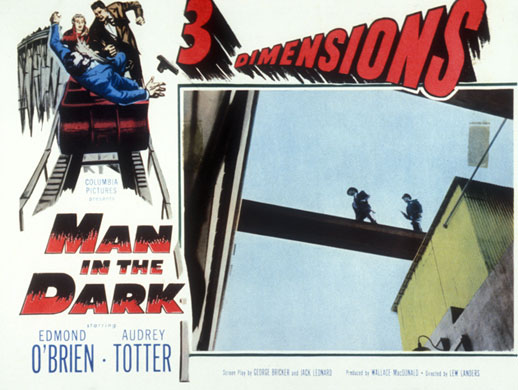
After shooting his stereoscopic Dial M For Murder in 1954, Alfred Hitchcock was unimpressed. 3D, he concluded, "was a nine-day wonder – and I came in on the ninth day".
Space Station (IMAX) would seem to be the category-killer for this cinematic form: A trip to a place only a handful of people can ever get to. Where else can compete with a journey into space? And truth be told after launch, orbiting the space-station is a rather cramped and underwhelming experience. But when you close your eyes after you can picture the memories incredibly close to having been a witness.
In terms of shot-options keeping the camera still and letting action move in front of you works best. Camera pans, zooms, and tracking all detract from the solidity of a static shot. As pictures start to blur the illusion is lost. For the same reasons fade transitions between images don't work and cause confusion. Flying over/ under/ through dont feel believable either. Hard cuts between static locations & fades to/from black; Those are the options available if you want to 'keep it real'.
Can James Cameron bring the form back to life in a digital fashion with Avatar or will this again be consigned to being little more than a marketing gimmick with limited application and only offering the illusion of artistic depth in cinematic art.
Early previews of a 15 minute teaser of Avatar are favourable and building the hype around expectations. As we come to learn however the best reviewers are your friends (apart from yourself of course). Not writers involved in the publicity machine.
Maybe Avatar will kickstart the demand for personal 3D viewers on '3D iPods' allowing immersion in sound and vision on trains and buses, bringing the 'daft punk' look to the high street, using devices similar to below:

Original image credit: Engadget


 Posts
Posts


No comments:
Post a Comment